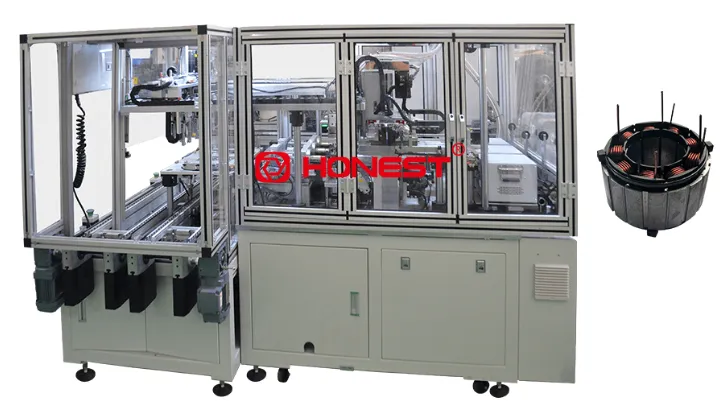
The global demand for energy-efficient electric motors continues to grow due to electric vehicles, industrial automation, robotics, HVAC systems, and modern household appliances. At the core of every high-performance motor is the winding process, which directly determines efficiency, torque stability, and durability. For this reason, the motor winding machine has become one of the most important technologies in modern manufacturing. Advanced electric motor winding machine systems ensure precision, consistency, and high-speed production in large-scale motor manufacturing environments.
The HONEST brand provides advanced industrial winding solutions designed for automated production lines, helping manufacturers achieve high accuracy, stable output, and reduced production costs in modern motor manufacturing.
Importance of Motor Winding Machine in Electric Motor Manufacturing Industry
The motor winding machine is a critical component in electric motor production because it directly influences the electromagnetic performance of the motor. Winding is responsible for creating the magnetic field that allows the motor to generate motion, and even small errors in this process can significantly affect performance. If the copper wire is not properly aligned or tensioned, it can cause overheating, energy loss, vibration, or reduced motor lifespan.
In a modern electric motor winding machine system, automation ensures that every coil is placed with exact precision, maintaining uniformity across all production units. This is especially important in mass production environments where consistency and reliability are essential. As industries demand higher efficiency motors, the importance of precise winding technology continues to increase significantly.
Working Principle of Electric Motor Winding Machine Technology
An electric motor winding machine operates using automated control systems that guide copper wire around stator slots in a highly controlled pattern. The process begins with stator loading, followed by automatic wire feeding, tension regulation, coil formation, and final shaping of the winding structure.
Servo motors and PLC control systems are widely used to ensure accurate positioning and consistent winding tension. The machine follows pre-programmed instructions that define the number of turns, coil shape, and winding direction. This level of precision ensures that every motor produced meets strict performance standards. Modern systems also include sensors that monitor real-time operation, detecting errors and making adjustments instantly to maintain production quality.
Types of Motor Winding Machine Systems Used in Modern Manufacturing
Different motor designs require different winding techniques. A modern motor winding machine system includes multiple machine types designed for specific applications and production requirements.
Automatic Stator Winding Machine Systems for Mass Production
Automatic stator winding machines are widely used in large-scale production environments where speed and efficiency are critical. These machines can handle continuous production cycles with minimal human intervention, making them ideal for industries producing thousands of motors daily.
Needle Type Electric Motor Winding Machine for Precision Work
Needle winding machines are used in applications that require extremely high precision, such as BLDC motors and small industrial motors. These machines allow accurate placement of wire inside tight stator slots, ensuring excellent performance and efficiency.
Insertion Type Winding Machine for Heavy-Duty Motor Production
Insertion winding machines are designed for high-power motors where thicker copper wires are used. They insert pre-formed coils into stator slots, ensuring strong structural integrity and high durability for industrial applications.
Inner and Outer Winding Machine Systems for Flexible Production
Inner and outer winding machines are designed to support different stator structures. They provide flexibility in production and are commonly used in factories that manufacture multiple motor types on the same electric motor winding machine line.
Key Technological Features of Electric Motor Winding Machine Systems
Modern winding machines are equipped with advanced features that significantly improve production quality and efficiency in industrial environments.
High Precision Servo Control Systems for Accurate Winding
Servo-driven control systems ensure precise wire placement and consistent tension control throughout the winding process. This eliminates variations and ensures stable motor performance.
Fully Automated Production Operation for Continuous Manufacturing
Automation allows continuous operation with minimal manual intervention, increasing production output while maintaining consistent quality standards across all motors.
Programmable Winding Design for Multi-Motor Compatibility
Modern machines can store multiple winding programs, allowing manufacturers to produce different motor types using a single motor winding machine system without reconfiguration delays.
Real-Time Monitoring and Smart Fault Detection Systems
Integrated sensors continuously monitor winding performance and detect errors instantly, reducing waste and improving production reliability.
High-Speed Multi-Axis Winding Capability for Industrial Efficiency
Multi-axis systems allow complex winding patterns at high speed, making them suitable for advanced BLDC and industrial motor production.
Role of Motor Winding Machine in BLDC Motor Production Line Systems
In a BLDC motor production line, winding is one of the most important stages because it directly impacts motor efficiency and performance. BLDC motors require precise coil placement to ensure proper magnetic balance and smooth operation.
A high-quality electric motor winding machine ensures that each coil is wound with perfect tension and alignment, which improves torque stability, reduces heat generation, and increases overall motor lifespan. Without precise winding technology, BLDC motors may experience vibration, inefficiency, and inconsistent performance, especially in high-speed applications such as drones, electric vehicles, and robotics.
Benefits of Electric Motor Winding Machine Technology in Manufacturing
Advanced winding systems offer significant advantages to manufacturers involved in large-scale motor production.
Higher Efficiency in Motor Production Line Operations
Automated winding machines significantly increase production speed while maintaining high precision and consistency.
Improved Electrical and Mechanical Performance of Motors
Accurate winding ensures better magnetic field distribution, resulting in improved torque and energy efficiency.
Reduced Manufacturing Costs Through Automation
Automation reduces the need for manual labor and minimizes production errors, lowering overall manufacturing costs.
Consistent Quality Across Mass Production Units
Every motor is produced with identical winding accuracy, ensuring uniform quality and performance.
Flexible Production Capabilities for Multiple Motor Types
Modern machines can be adjusted for different motor designs, making them highly versatile in industrial production environments.
Common Challenges in Motor Winding Machine Systems
Despite advanced technology, manufacturers still face certain challenges in motor winding machine operations.
High Precision Requirements for Modern Motor Designs
Even small deviations in winding tension or coil placement can significantly affect motor performance and efficiency.
Complex Machine Calibration and Maintenance Needs
Regular calibration is necessary to maintain accuracy and prevent long-term performance issues in automated systems.
Material Quality Sensitivity in Copper Wire Usage
The quality of copper wire and insulation materials directly affects winding performance and motor durability.
High Initial Investment in Advanced Automation Systems
Modern electric motor winding machine systems require significant investment in equipment and infrastructure.
HONEST Solutions for Advanced Electric Motor Winding Machine Technology
The HONEST brand provides advanced industrial solutions designed specifically for modern motor winding machine systems used in high-volume production environments.
HONEST machines feature intelligent automation systems, high-precision servo control, and flexible programming options that support different motor types including BLDC, AC, and DC motors. These systems are designed to improve production efficiency while ensuring stable long-term operation and reduced maintenance requirements.
Key advantages of HONEST solutions include fully automated production systems, real-time monitoring capabilities, energy-efficient operation, and scalable manufacturing configurations that support both small and large production facilities.
Future Development of Electric Motor Winding Machine Industry
The future of electric motor winding machine technology is expected to be driven by artificial intelligence, robotics, and smart manufacturing systems. Fully automated factories will become more common, allowing manufacturers to achieve higher efficiency and lower production costs.
Future innovations will include AI-based defect detection, self-adjusting winding systems, predictive maintenance, and fully digitalized motor production line environments. These advancements will make motor manufacturing faster, smarter, and more reliable than ever before.
Conclusion
A modern motor winding machine is essential for producing high-quality electric motors with consistent performance and reliability. Advanced electric motor winding machine technology ensures precision, efficiency, and scalability in modern manufacturing systems.
The HONEST brand plays a key role in this transformation by providing advanced winding solutions that help manufacturers improve productivity, reduce operational costs, and achieve superior motor quality. As technology continues to evolve, winding systems will become more intelligent, automated, and essential for the future of electric motor production.